Page 1 of 2
Ignition switch losing 1-1.5v
Posted: Mon Apr 29, 2019 2:04 pm
by neilbardsley
My car failed to start the other day. I immediately put it on charger which said I had 6.1v at the battery. Then I put the multimeter before the ignition switch 5.9v and < 4v after. I took out wire 50 to the starter. Cut it and put a fresh but of wire in but still losing 1 to 1.5v. Switch looks new and no obvious way to disassemble.
I think about spray in some cleaner or using a relay to bypass?
Sent from my HTC One M9 using Tapatalk
Re: Ignition switch losing 1-1.5v
Posted: Mon Apr 29, 2019 5:03 pm
by Ashley James
It’ll probably heat up as well, so I’d buy a new one for safety.
Re: Ignition switch losing 1-1.5v
Posted: Tue Apr 30, 2019 9:54 am
by neilbardsley
OK one coming from the US
Sent from my HTC One M9 using Tapatalk
Re: Ignition switch losing 1-1.5v
Posted: Tue Apr 30, 2019 10:42 am
by Ignatzcatz
Damn the originality, go 12V and all your troubles will be over.
Re: Ignition switch losing 1-1.5v
Posted: Tue Apr 30, 2019 11:35 am
by POR68
6V forever. Good battery, good earths and good wiring it works really well. Especially with Fred Winterburn's 6V switchable CDI unit hidden away.
Re: Ignition switch losing 1-1.5v
Posted: Wed May 01, 2019 7:20 am
by 40 scout
Ign sw just provides feed to solenoid ?
If solenoid engaging then enough is getting through switch I think?
Slow turning is more to do with the starter cable cct from the battery ?
Or brushes etc in starter motor.
Assuming battery fine.
Happy to be corrected

Steve
Re: Ignition switch losing 1-1.5v
Posted: Wed May 01, 2019 11:14 am
by roy mawbey
Steve,
I agree with you the ignition wire goes to the solinoid.Sure the ignition switch does have contacts inside and can cause problems but if the solinoid is working then more likely its a bad earth or the contacts inside the solinoid itself. If Neil has the starter with the solinoid that has a riveted end cap then its likely its never been removed ( like mine was ) and the three copper points inside could be so dirty like mine were!!
Also though, the connections from the solinoid to ignition switch and battery should be checked. I had to cut back the ignition wire at the solinoid end as it was so green in places.
If your starter is normally really fast on turn over Neil check every connection point in the circuit. If its slow then consider the solinoid contacts. The bell housing bushing for some is the way to go, I changed mine but it was not the problem solver for me. The 6volt system works perfectly if all is in order.
Hope it does prove to be just a defective ignition switch Neil, they are not cheap as I had to buy one myself when the key operation failed a year ago.
Roy
Re: Ignition switch losing 1-1.5v
Posted: Wed May 01, 2019 1:09 pm
by Hugo 356
Hi Neil,
If the new switch doesn't fix the problem, or works temporarily, and you have cleaned connections and earths, I suggest making up a relay which powers the starter solenoid from the heavy duty cable that goes to the starter motor, rather than the ignition switch circuit (instructions can be found in the Registry archive). The parts are cheap to buy, it will preserve your ignition switch and makes an enjoyable project (if it resolves your issue anyway...)
My feeling is that as the system ages, the ignition switch circuit is not sufficiently robust to carry the amps pulled by the solenoid (though I may of course have had another un-diagnosed problem). So far it has resolved a long standing starting issue I had (having cleaned contacts & earths, replaced ignition switch, replaced starter solenoid, had starter rebuild by Broadway, replaced bushing in bell housing, read lots of threads and articles on starter problems, lay awake at night thinking about electricity etc....)
Good luck!
Hugo
Re: Ignition switch losing 1-1.5v
Posted: Wed May 01, 2019 5:43 pm
by neilbardsley
When the voltage is low the solenoid isn't clicking!
Sent from my HTC One M9 using Tapatalk
Re: Ignition switch losing 1-1.5v
Posted: Wed May 01, 2019 6:16 pm
by 40 scout
Sounds like the switch Neil
Steve
Re: Ignition switch losing 1-1.5v
Posted: Wed May 01, 2019 6:35 pm
by mycar
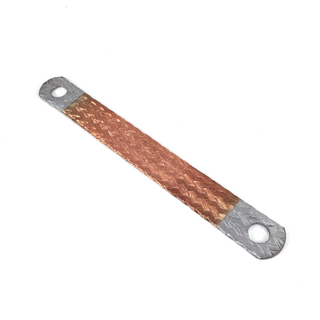
Sounds like an earthing problem to me. What's the condition of the earth strap between transaxle and body, it can become corroded and cause all sorts of electrical gremlins.
Looks like this...
Goes here....

Re: Ignition switch losing 1-1.5v
Posted: Wed May 01, 2019 8:21 pm
by neilbardsley
mycar wrote:Sounds like an earthing problem to me. What's the condition of the earth strap between transaxle and body, it can become corroded and cause all sorts of electrical gremlins.
Looks like this...
Goes here....
Pretty good but I will give a clean next time I'm there.
Re: Ignition switch losing 1-1.5v
Posted: Wed May 01, 2019 9:00 pm
by mycar
There's a good chance a mere clean won't help at all. The strap is of a plaited copper wire construction which, when corroded becomes a very poor conductor indeed.
At first glance it may appear sound...
But removal and inspection often reveals advanced corrosion deep within the weave, rendering the strap near to useless.
Much better to fit a new earth strap. They're not too expensive and then you can tick it off as a "It's a definitely not that then" component.
Re: Ignition switch losing 1-1.5v
Posted: Wed May 01, 2019 9:58 pm
by 356Monkey
Fit a starter relay, the relay will massively reduce voltage drop. there are a few kits out there. I made my own one by purchasing a 6 volt 50amp relay plus a few connector wires so I could locate it next to the ignition switch. There is a version out there which wires under the car to the starter motor, I'm less of a fan of this version as the relay isn't really meant to live outside of the car exposed to the elements and also it's a old git tot get to if you need to change the relay.
Re: Ignition switch losing 1-1.5v
Posted: Fri May 03, 2019 4:01 pm
by Winston Teague
What is said above is all valid, do you have a modern 'hi-torque' starter? if so the relay bypass is essential, and needs to be installed at the starter motor, some of the Japanese/chinese starters have solenoids that take up to 40 amps on the trigger wire. VERY BAD. W